Articles
Vibe Coding: Building Apps That Actually Work
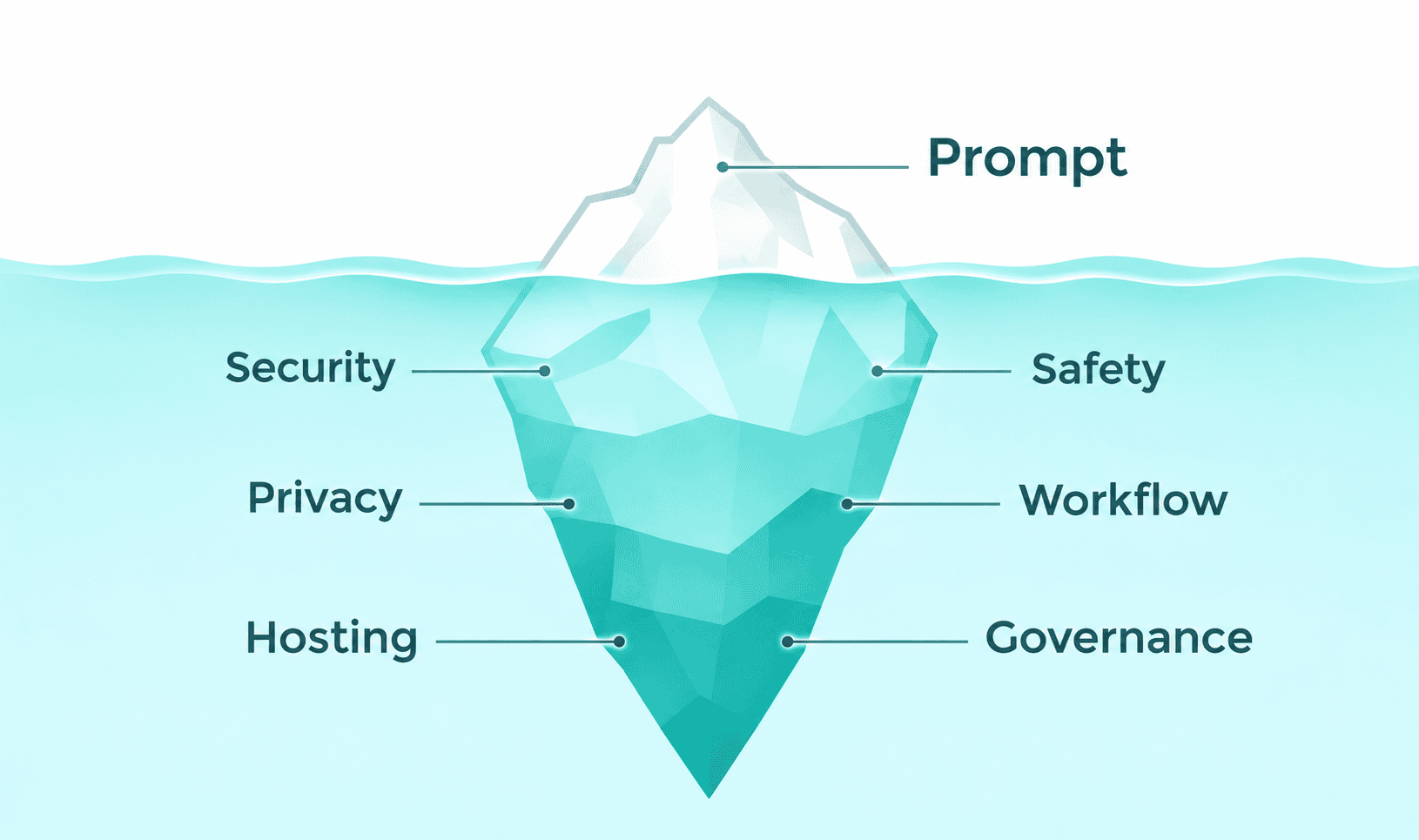
The Responsibility | Part 2 of the Beyond the Hype Series. A working application isn’t necessarily a business-ready application. I discovered this while experimenting with vibe coding to build a travel management application. Creating forms, dashboards and navigation menus was relatively straightforward. But introducing real business requirements raised some interesting questions.
The Responsibility | Part 2 of the Beyond the Hype Series
In Part 1: The Discovery | Vibe Coding: Anyone Can Build an App. Really?, we explored how AI-powered tools can turn ordinary language into working applications, often in minutes. It is exciting, especially for people with great ideas but little experience writing software.
But there’s a catch.
A working application isn’t necessarily a business-ready application.
I discovered this while experimenting with vibe coding to build a travel management application. Creating forms, dashboards and navigation menus was relatively straightforward. But introducing real business requirements raised some interesting questions.
Who can access employee information? How are approvals controlled? Where is the data stored? And what happens when something breaks?
These are the less glamorous aspects of application development. They rarely feature in impressive 30-second social media demonstrations or even those 30-minute, step-by-step YouTube tutorials!
Let’s explore what you should consider before putting your AI-generated application to work.
Authentication: Who Are You?
Imagine creating an application for employees to submit travel requests. The first question is simple: How do employees sign in?
Most vibe coding platforms offer basic authentication through email, passwords or social logins. Businesses, however, often prefer employees to use their existing company accounts.
This is where Single Sign-On (SSO) comes in.
SSO allows employees to sign in using an existing identity, such as Microsoft Entra ID or Google Workspace, rather than managing yet another password.
Behind the scenes, a trusted identity provider verifies the user and helps the application establish a secure session.
There is an important distinction, though. SSO for developers accessing a vibe coding platform isn’t necessarily the same as SSO for employees using the finished application. These may require different configurations, services and subscriptions.
Before investing in a more expensive business plan, understand which type of SSO you need and whether your chosen platform supports it.
Authorization: What Are You Allowed to See?
Authentication confirms who you are. Authorization determines what you’re allowed to do.
In our travel application, employees should see their own requests, managers should access requests awaiting approval, and finance may need visibility across departments.
This introduces Row-Level Security (RLS), an important concept in database security.
Imagine a database containing 1,000 travel requests. An employee might be allowed to see five, a manager 50, and finance all 1,000.
RLS helps ensure users access only the records they’re authorized to view.
But here’s the catch: hiding information on a screen isn’t enough. Access restrictions must also be enforced by the application’s database or backend.
Otherwise, you might have an attractive application that politely hides sensitive information on the screen while leaving it accessible through other means.
Not ideal for employee travel records. Even less ideal for payroll!
Data Privacy and Security
An application storing employee details, customer information or financial records needs appropriate protection.
Before publishing, ask a few important questions:
- Where is the data stored, and who can access it?
- Is information encrypted and protected against unauthorized access?
- Can deleted or damaged records be recovered?
- Are activities logged for troubleshooting and auditing?
- Does the application meet relevant privacy regulations and company policies?
Depending on your business and users, regulations such as Singapore’s PDPA or Europe’s GDPR may also apply.
Vibe coding platforms provide various security features, but configuring and testing them correctly remains your responsibility.
A login screen is not a security strategy.
Databases Need Attention Too
AI can create database tables and relationships almost effortlessly. Impressive, but databases don’t look after themselves forever!
As applications grow, records accumulate, requirements change and mistakes happen. Backups, recovery, data retention, performance and access permissions all need attention.
For a personal project, managing these might be relatively simple. For a business application containing thousands of transactions, they’re much more important.
You may not need a dedicated database administrator, but someone must take responsibility for the data.
And if you eventually decide to move to another platform, you’ll want to know how that data can be exported and migrated.
Hosting: Convenience or Control?
Most vibe coding platforms provide built-in hosting, making publishing surprisingly simple. Build your application, click Publish, and it’s online!
For prototypes and smaller applications, this convenience is attractive.
However, businesses may prefer independent hosting on services such as Microsoft Azure, AWS or Vercel for greater control over infrastructure, security and integrations.
There’s a trade-off. With independent hosting, you may become responsible for databases, backups, monitoring, security updates and deployment.
And there’s something important to remember:
Exporting an application’s code doesn’t necessarily mean you can move the entire application easily.
Your application may still depend on the original platform’s authentication, database or backend services.
Before committing to a platform, understand what can be exported, what remains dependent on the provider and what would need to be rebuilt.
GitHub: Your Application’s Safety Net
If you’re developing something beyond a temporary experiment, consider integrating your application with GitHub.
GitHub is a service for storing and managing source code. Think of it as a development history that lets you track changes, revisit earlier versions and collaborate with other developers.
For example, you might build your application using Lovable and later involve a professional developer to introduce more complex features. Having the source code in GitHub makes that transition easier.
It can also support automated testing and deployment.
One important clarification: GitHub isn’t a substitute for database backups. Saving the recipe doesn’t mean you’ve saved the cake!
Vibe Coding Platforms or AI Coding Agents?
There’s another interesting option beyond platforms such as Base44, Lovable and Bolt.
AI coding agents, including Claude Code and OpenAI Codex, can work directly with source code, modify existing applications, troubleshoot problems and assist with testing.
So, which approach should you choose?
Visual vibe coding platforms provide an easy starting point, often combining application development, databases, authentication and hosting in one environment.
Coding agents offer deeper control over the application and are particularly useful when working with existing code or developing more complex features.
There’s also Claude Design, which focuses on creating and refining visual concepts, layouts and prototypes before development.
Here’s a simple comparison:
| Your objective | Consider |
|---|---|
| Build a prototype or internal application | Base44, Lovable or Bolt |
| Explore visual designs and mockups | Claude Design |
| Modify or extend an existing application | Claude Code or Codex |
| Maintain a complex custom application | Coding agents with professional developers |
These tools aren’t necessarily competitors.
You could begin with Lovable, connect your project to GitHub and later use Codex or Claude Code for more advanced development.
The benefit is flexibility. The trade-off is that coding agents generally require greater familiarity with software development and infrastructure, particularly for production applications.
A Few Lessons Worth Remembering
Before building a business application with AI, start with a few simple questions.
Who will use it? What information will it store? What can each person access? How will it integrate with existing systems? And who will maintain it?
You don’t need a 100-page technical document, but a little planning can save considerable trouble later.
AI is remarkably good at generating code. It still needs someone who understands what the application should accomplish.
Final Thoughts: Beyond the Attractive Interface
Vibe coding removes much of the technical effort involved in creating software, but the fundamental responsibilities remain.
Security, data management, reliability and maintenance don’t disappear simply because AI wrote the code.
Someone still needs to understand how everything fits together and ensure the application continues to work as intended.
AI can help build the application. It cannot take responsibility for the business decisions behind it.
Coming Up in Part 3
We’ve explored what happens behind the attractive interface. Now comes another important question: How much does all this actually cost?
In the final article, Vibe Coding: The Hidden Costs and Hype, we’ll compare Base44, Lovable and Bolt, explain credits and subscriptions, and examine some of the spectacular promises circulating on social media.
Spoiler: The applications may be built by AI, but the bills still arrive in your name!
- #Artificial Intelligence
- #Vibe Coding
- #Vibe Coding: Beyond the Hype
Found this useful? Share it.