Articles
NVIDIA, Jensen Huang and the Danger of the Irreplaceable Leader
When a company’s success revolves around one extraordinary individual, is that its greatest strength or its biggest vulnerability? For more…
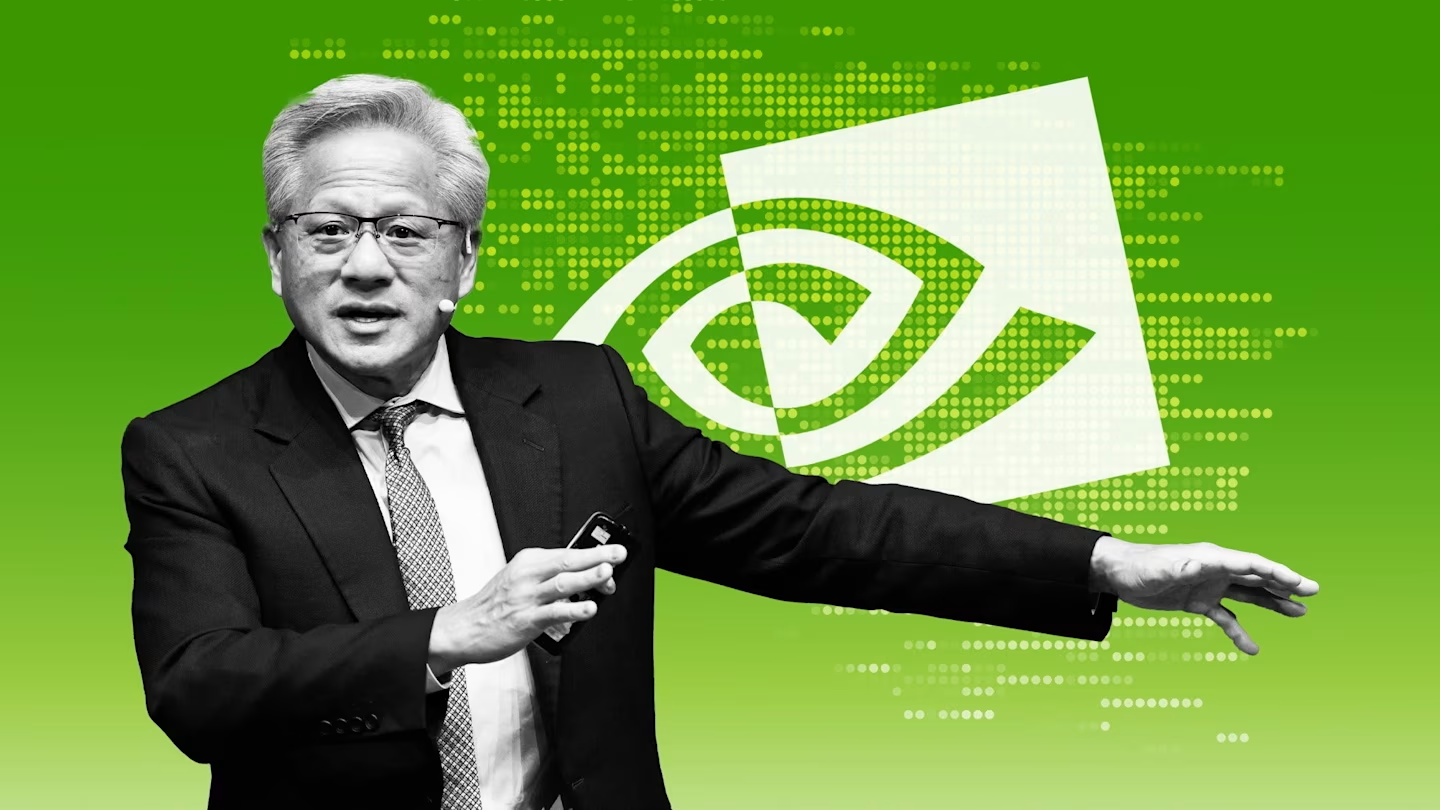
When a company’s success revolves around one extraordinary individual, is that its greatest strength or its biggest vulnerability?
For more than three decades, Jensen Huang has been practically synonymous with NVIDIA.
He co-founded the company in 1993 and helped transform it from a graphics chip manufacturer into one of the most influential businesses in artificial intelligence.
Few technology leaders have demonstrated comparable vision and consistency.
But the events of November 2026 have exposed an uncomfortable vulnerability in NVIDIA’s remarkable success story: its dependence on one person.
Following a controversy involving Huang’s personal conduct and reported national-security concerns, Huang resigned as NVIDIA’s CEO on 12 November 2026. CFO Colette Kress was appointed interim CEO while the board began searching for a permanent successor.
The allegations surrounding the controversy remain separate from the question of corporate succession. They should be treated as allegations rather than established findings.
For me, the more interesting business question is not about the controversy itself.
It is about what happens when a company loses the person who has shaped nearly every aspect of its identity.
The brilliance and danger of a visionary leader
There is no denying Huang’s contribution to NVIDIA.
Long before generative AI became a household topic, NVIDIA invested heavily in accelerated computing and the software ecosystem surrounding its chips.
Those investments helped position the company at the centre of the AI revolution.
Huang became more than a CEO. He was NVIDIA’s technology evangelist, strategic thinker, public spokesperson and driving force.
Such leadership has enormous advantages.
Decisions can be faster. Strategic direction is consistent. Employees understand the vision. Customers and investors associate the company with a recognisable figure.
But there is a hidden cost.
The stronger the association between a business and an individual, the harder it becomes to imagine the business without that individual.
A brilliant leader can build an extraordinary company. But an extraordinary company should not depend on the continued presence of that leader.
Succession planning is not about replacing people
Succession planning is frequently misunderstood.
Many executives see it as identifying someone who will eventually take over their position.
Understandably, this can create discomfort. Nobody enjoys discussing their replacement, particularly when they are performing exceptionally well.
But succession planning is not about making leaders redundant.
It is about making organisations sustainable.
A well-managed company should be able to continue operating when an important executive retires, resigns, becomes unavailable or moves into another role.
That does not mean the replacement must be equally charismatic, experienced or visionary.
It means the organisation has developed enough leadership depth, documented knowledge and decision-making capability to manage the transition.
In NVIDIA’s case, Huang’s unusual leadership structure adds another complication.
Reports have described a relatively flat organisation with more than 50 executives reporting directly to him and no clearly identified second-in-command.
This raises questions about how easily one person can assume responsibilities previously concentrated in the founder’s office.
The problem with indispensable employees
This issue is hardly limited to multinational technology companies.
It exists in businesses of every size.
Consider a mid-sized company where:
- One senior salesperson manages all the major customer relationships.
- One finance manager understands the entire reporting process.
- One technology specialist maintains a critical application that nobody else fully understands.
- One executive makes practically every significant business decision.
These employees may be extremely valuable.
But their indispensability also represents a business risk.
I have encountered this challenge throughout my career in information technology.
Sometimes, a critical application depends on one developer. Occasionally, a business process relies on undocumented knowledge held by an experienced employee.
Everything works beautifully until that person goes on leave, resigns or becomes unavailable.
Suddenly, the organisation discovers that its knowledge was never really institutionalised.
It was simply stored in someone’s head.
And unlike cloud storage, that particular repository rarely comes with automatic backups!
What good succession planning looks like
In my view, succession planning must go beyond identifying a potential replacement.
It requires four complementary efforts.
First, develop leadership at multiple levels. Give capable employees opportunities to make decisions, manage projects and take ownership of outcomes.
Second, distribute knowledge. Encourage documentation, mentoring, cross-training and collaboration. Important information should belong to the organisation, not remain exclusively with individuals.
Third, create an emergency succession plan. Every critical role should have a clear interim arrangement, even when a permanent successor has not been identified.
Fourth, make succession a board-level responsibility. The process should remain active regardless of how successful or influential the current leader may be.
For smaller companies, this need not involve expensive consultants or elaborate leadership programmes.
A clear responsibility matrix, competent deputies and regular cross-training can make a meaningful difference.
Founders face a special challenge
Founder-led organisations are particularly vulnerable to this issue.
The founder often carries the company’s history, culture, relationships and strategic instincts.
A successor might inherit the title, but not necessarily the founder’s influence or experience.
That is why succession cannot begin only when a departure becomes unavoidable.
It requires years of developing people and gradually distributing responsibility.
And there is another important distinction.
A successor does not need to become a carbon copy of the founder.
The next generation of leadership may bring different strengths, new perspectives and alternative approaches.
That can be healthy for the organisation.
What NVIDIA teaches us
NVIDIA’s leadership transition will be closely watched by investors, customers, employees and the broader technology industry.
Its experienced executive team and established technology ecosystem are important strengths. However, the leadership transition will test how effectively the company can operate beyond its founder.
The lesson extends far beyond NVIDIA.
In every organisation, we should occasionally ask ourselves a simple question:
If our most important leader or specialist were unavailable tomorrow, how much of the business would continue without interruption?
If the answer makes us uncomfortable, we have identified an area that deserves attention.
The true legacy of a great leader is not how indispensable they become, but how well the organisation continues to succeed without them.
- #Jensen Huang
- #Nvidia
- #Succession Planning
Found this useful? Share it.
Related reading

Articles8 min read
Switching to Mac: Confessions of a Windows Power User
After decades of working with Windows, I decided to give Apple’s ecosystem a serious chance. Was it better creative performance,…

Articles3 min read
Microsoft 365 Outage: Is Your Business Entitled to Compensation?
The November 2026 Microsoft 365 outage disrupted businesses worldwide. Here’s how small and mid-sized businesses can check their eligibility, estimate…

Articles10 min read
Friday the 13th, When the Cloud Goes Dark
And When Microsoft 365 Took an Unplanned Holiday One of the world’s most trusted cloud platforms went down, leaving businesses…