
Comfortable is Dangerous
Back to University at 52 After 30 Years in Technology
After three decades in technology, you develop instincts. You learn to recognise patterns, separate meaningful innovation from passing hype, and rely on experience to guide decisions. Over time, that experience becomes a reliable compass.
But every so often, the industry shifts in a way that makes you pause.
For me, that moment arrived with the rapid rise of artificial intelligence.
AI wasn’t just another technology wave. The pace of change felt fundamentally different. Conversations that once belonged to research labs were suddenly appearing in boardrooms, strategy discussions, and everyday tools. As someone responsible for leading technology decisions in a global organisation, I realised that relying on headlines, vendor presentations, or second-hand interpretations would not be enough.
I needed deeper clarity.
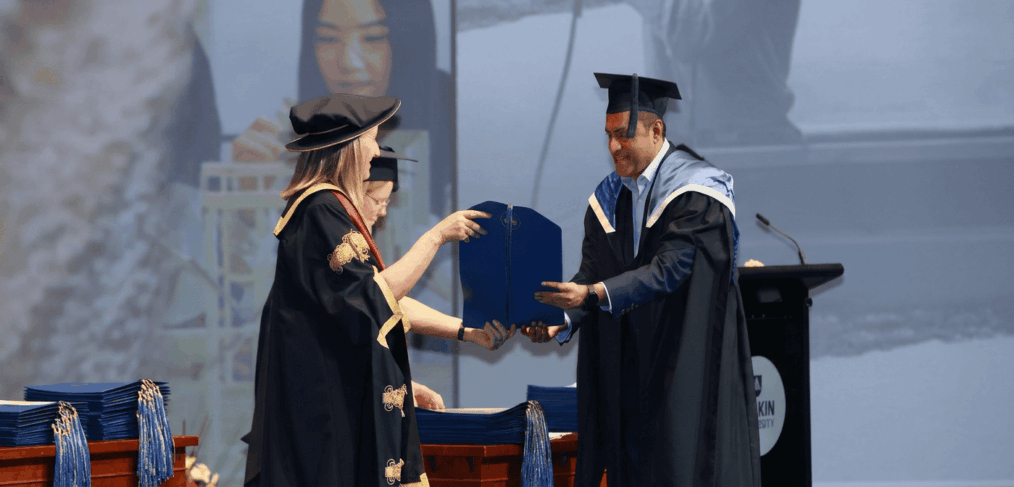
That is how, at the age of 52, I found myself back at university pursuing a Master of Data Science.
This was never about restarting my career. It was about recalibrating it. I wanted to understand what is genuinely new in data science and machine learning, what is simply the evolution of ideas that have existed for decades, and where the real value lies when these models meet messy business reality.
Structured learning has a way of sharpening your thinking. It forces you to revisit fundamentals, statistics, probability, modelling, and to validate instinct with evidence. Somewhere between regression models, Python notebooks, and late-night assignment submissions, I was also reminded of something valuable that experience sometimes hides: intellectual humility.
Experience is powerful. But if it is never challenged, it quietly turns into comfort.
And comfort, in a world evolving at exponential speed, can become dangerous.
Beyond the AI Hype
Much of the public conversation around AI sits at two extremes. One side believes AI will solve every problem, while the other fears it will replace entire professions.
Reality is far more practical.
AI is a powerful tool, but it is still a tool. Its value depends entirely on how well it is understood and applied. The real risk is not the technology itself, but deploying systems without understanding their assumptions, biases, or limitations.
That is why education matters. Not because every leader must build complex models, but because leaders must ask the right questions before deploying them.
A Valuable Reminder
One of the most refreshing aspects of this journey was stepping back into the role of a student.
In leadership positions, we are expected to have answers. Yet some of the most responsible decisions begin with a simple statement: “Let me understand this properly.”
Continuous learning is not just an academic exercise. It is a leadership responsibility, particularly in fields evolving as rapidly as AI and data science.
The People Behind the Degree
No degree is earned alone.
Behind every assignment submitted, every exam prepared, for every weekend study sessions, and every moment of doubt, there were people quietly making the journey possible.
This degree may carry one name on the certificate, but the journey belongs to many.
The Family, My First Support System
My family deserves the first and biggest thank you.
My wife, Sejal, has been the steady force behind every professional milestone in my life, and this journey was no exception. Returning to academic life meant evenings filled with coursework, weekends occasionally hijacked by assignments, and more discussions about statistics than anyone should reasonably endure.
She handled it all with patience and encouragement.
My children, Khwahish and Rutva, who are pursuing their own academic journeys, also became unexpected study companions. There were times when all of us were preparing for exams, different courses, different countries, different universities, but the same determination to get through the next deadline.
It turns out studying together as a family is surprisingly motivating… and occasionally competitive.
The Friends, Who Refused to Let Me Become Boring
A special thanks must also go to my long-time boys’ group.
They showed remarkable patience during trips that were meant to be relaxing but occasionally involved me disappearing with a laptop to submit an assignment or review a model.
While they struggled with volleyball and cricket, and the correct way to cook barbecue, I used to disappear to submit my assignments or attend a study session. Despite this behaviour, I’m still invited.
That’s friendship.
The Organisation, That Backed the Journey
I am also deeply grateful to Grupo Kaybee, especially Zubin Chand and Govind Karunakaran, for their trust and support.
Funding the program was generous, but equally important was the flexibility provided during the course. Balancing executive responsibilities with academic deadlines is not always straightforward, and the understanding shown during this period made the journey possible.
When organisations invest in learning, they are not just supporting an individual, they are investing in future leadership capability.
I feel fortunate to work with leaders who recognise that.
Teachers Who Made the Complex Understandable
Finally, my sincere appreciation goes to the faculty and support teams from Deakin University and Great Learning.
Teaching data science to professionals with full-time careers is no small task. Yet the faculty managed to strike the perfect balance between academic rigour and practical relevance. Concepts that initially looked intimidating on paper gradually became clearer through patient teaching, engaging discussions, and a fair number of well-designed assignments.
The support staff also deserve recognition for keeping everything running smoothly behind the scenes, coordinating schedules, assisting with queries, and ensuring that even students juggling careers and families could stay on track.
They made a demanding program both manageable and genuinely enjoyable.


What This Chapter Means
Graduation is not an endpoint. It is a checkpoint.
It signals readiness to engage with complex technological change with greater clarity and responsibility. The biggest lesson from this journey is simple:
Comfort can become dangerous in a world that evolves exponentially.
Curiosity, on the other hand, keeps us moving forward.
For anyone considering returning to learning at any stage of their career, take the step. Not for the title, but for the perspective it brings.
Because the future belongs to the curious.